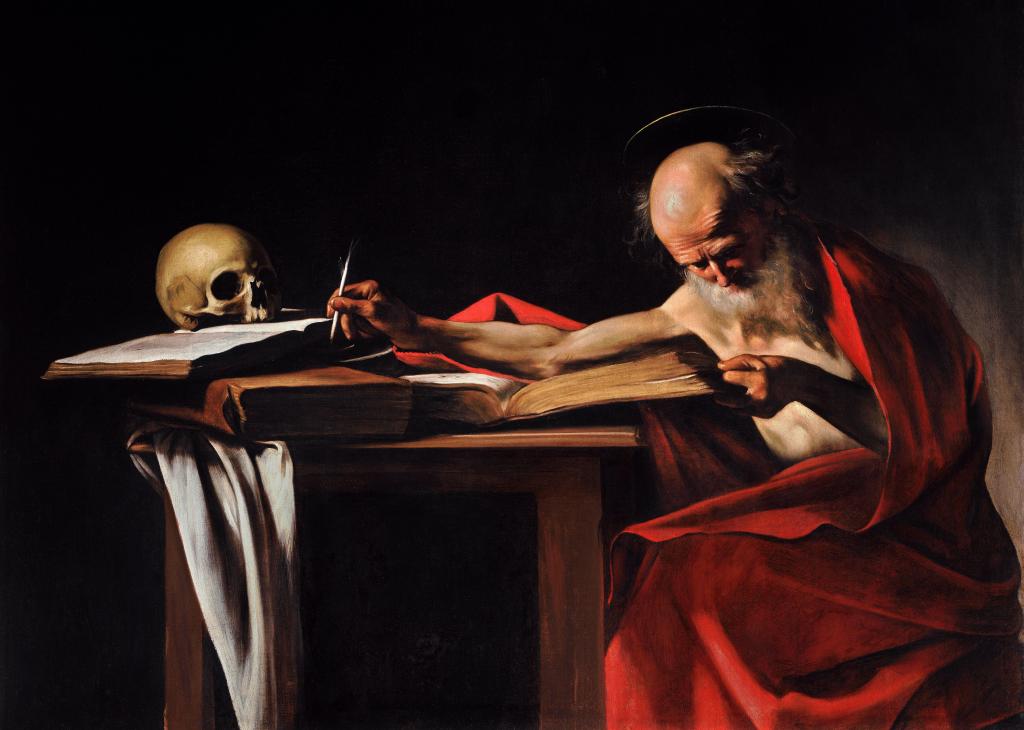
To start off with the Nightporter I’d like to talk about my process of writing and composing for a bit. After all, this publication is not only to talk about the art of other people. I’m an artist too, dammit! But it’s more because in these last couple of years I’ve been more interested on talking about how I usually write anything since it never occurred to me before that it’s an unusual process.
Where should I start? I have no idea. I guess we can start with the texts. You can jump to the songs/poems part if you wish.
Texts (journal entries included)
I write short stories, journal entries and essays. I like to not plan where I’m going with an entry or an essay, since I trust my mind to guide me to beautiful places now (that’s a phrase I used to think I’d never say). I usually just know what I’m going to talk about, maybe a few metaphors that come to mind immediately and work from there.
I always try to focus on some subjective aspect of what I’m writing — what it makes me feel, or a personal story I have with it, rather than just being straight criticism. Even for movies I write critiques for I don’t consider myself a critic. I like to talk about what I enjoy in those artworks, not really focusing on the negative. Not that critics are negative, but they need to be when necessary. I just don’t have it in me.
As everything I write, it passes through a sort of filter of metaphors and comparisons, and at the end of the day you’ll get better with those the more you write and read. Because of my experience of over a decade of writing things that come from deep parts of me, I usually feel comfortable with the way my texts progress. They’re not that good and sometimes they can be rudimentary or long-winded or drag too much, but we’re all still growing up in this land of the minds, and I plan to evolve my writing with time as I solidify my style.
However, some bits are intentional. I find broken english charming, so I tend to be more literal when translating a portuguese thought to english. This makes for a text that can sometimes be clunky — and I’d like to get better at it — but it also works for me. I call it my own little odd way of saying things. If you write on your second language, you can think of it as an opportunity to unite them.
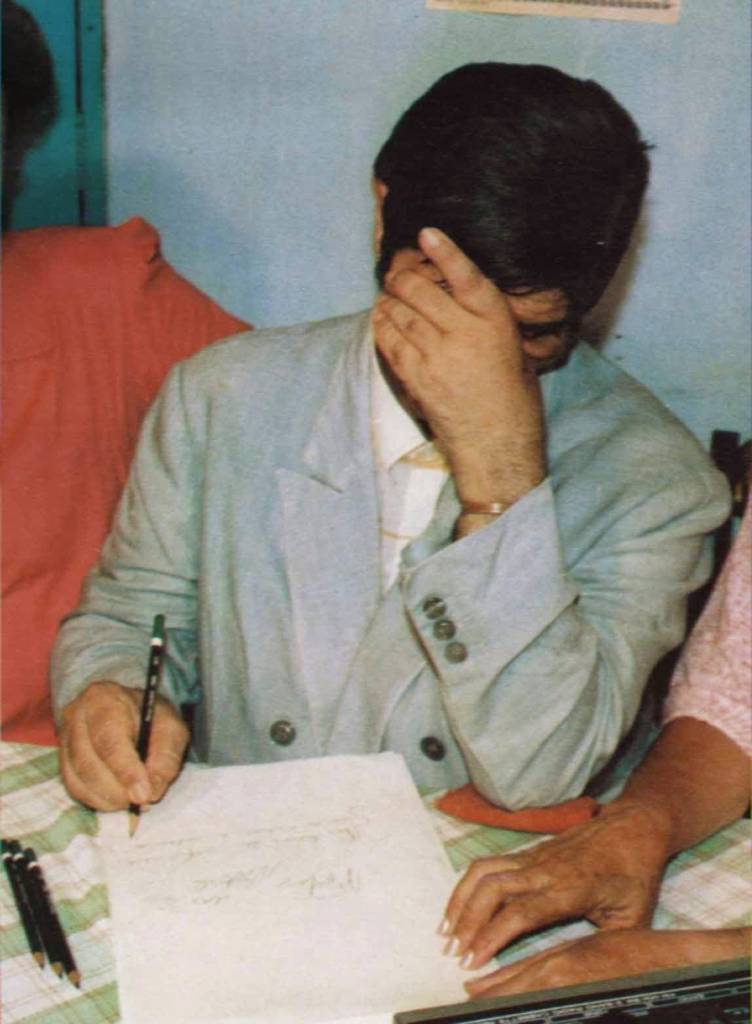
In Brasil, we had a guy named Chico Xavier, he was a medium. One thing he was very known for was channeling letters from spirits; he would put his hand on his eyes and write letters from the beyond. He sold a lot of books like this, often giving authorship to the spirits.
The other day I jokingly told my friend that my process of writing is similar to this. To understand, we need to talk a bit about songs and poetry. What I’ll say there works for texts too, mostly.
How I write (and how I wrote) my songs
I write songs ever since I was very little. I always had an affinity for songs, so I naively would like to make my spin on it and try to write something new. Since it happened not that often and most of those songs are now lost to time, I only consider myself an actual songwriter starting from 2014-2015, when I was 13-14. We can talk about my progression as a songwriter for a bit, and it all sort of comes from one day. This story, which in its own way started in the middle of itself, started with an unrequited love, as all my stories usually begin with.
I was on history class. I couldn’t pay a lot of attention to the professor because of my poor attention span, but there wasn’t anything else to do. I was bored out of my mind. I started to try and listen to the conversations around me, since everyone from my side of the classroom was collectively ignoring the professor and talking to each other. Then, I overheard my crush talking to her friend. She was talking about her boyfriend, they recently got together. She was talking about him as a prince. I just couldn’t listen to it. Suddenly, it was like my mind wanted to escape from all the sounds of that room, overflowing with stimulation in the empty cup of my brain.
So, as I was a bit anxious with the situation, I noticed something. My feet was bumping on the ground, making a beat that immediately interested me. I said to myself “KEEP THAT BEAT, PLEASE” until I could focus and think of it as musical. Even though it was all very simple, I ended up writing a song that evening just from that little distraction exercise, using only that beat as an initial lighthouse — a headbanging rock song called “Gnashing Misery” about a dystopian world where robots were being enslaved by humans and kept underground with big machines and smog filling the whole place, until a robot rebels against it. The song, then, was about what the robot said to his fellow robots to make them rebel. Look, I was 13, okay? It was 2014, and we weren’t really that deep on the exhaustive excess of dystopian media, so the song didn’t feel tired. It was inspired by “Underground”, a Tom Waits song that plays on that part of the movie Robots where it shows all the robots working under the city. My lifetime love for Waits started with that song.
The difference from any experience like this that happened before it was that I really enjoyed the song. Slowly and with the next songs, I would fall in love with the process of writing. I would start to think of myself as a frontman and think about having a band and all that.
During a period in 2015, I would actually write a song every day. I ended up losing almost all of them since there were no backup tools that I used back then, and they probably all sucked, but at the time I loved most of them.
When I talk about writing songs, I think that my friends may think I write lyrics before the melody. Actually, I always hated to listen to songs where I know the lyrics came before the melody; and let me tell you, you can always know. I always start with the melodies. The way that it used to happen on 2015 was that literally out of nowhere I would be visited by a melody. I would be walking around my house and out of nowhere my brain would play the sickest bassline of all time and I just had to write something around it right there and then. It happened very frequently and I remember them being all very good.
The process has changed quite a lot over the years. I still get visited by a melody, but quite often it starts from a phrase, actually. I think of a phrase or a word and then repeat it in my head until it finds a melody. My best melodies come from this process, I highly recommend it. But then, I need to write the lyrics.
The only way that it differs from the texts, poems and essays is that I actually value internal rhymes and this sort of internal cohesion with the melody way more than just saying what I want to say directly. This means that it is sort of an ethereal process still (more on that on the next segment), but it needs to follow the metrics imposed by the melody. This can happen on an essay or journal entry, but it’s not during the whole text.
Since what I’m about to explain goes for poetry as well as music, I will divide it into its own section.
Poetry (but songs, too)
The way I like to explain the process is that it’s as if I vomit something on the paper and it makes this sort of Rorschach pattern that I need to understand.
I think of what I want to say and it creates an image or a sensation in me. So I focus on that picture or sensation usually going for the words that come to me when I look at it or feel it. It’s like when a psychologist will tell you that the words you use to describe something tell them a lot about how you feel about it, you know? For example, if I think about my past mistakes and I want to start a song with something like “What other hands does a thief have?”, it intrigues me because it tells me a lot about what I actually, deep down think about myself at that moment. The process feels like you’re writing a metaphor or as if you’re a photographer searching for a landscape to translate the emotions inside you, but you can actually edit that landscape since it’s in your mind. You detach so much from what you directly wanted to say that your writing becomes more colorful and, funny enough, you risk losing yourself a bit.
What I mean about that last part is that the funniest thing about this process is that sometimes I’ll write a song about something, enough time passes, I come back to it and I have absolutely no idea what I meant. This is why it’s a Rorschach for me; it’s so cryptic that it becomes a place for me to hide myself, sometimes from myself. I learned with time to read myself better, so even if I forget what I meant at the time I can read it and understand it because I understand myself better. Sometimes it even can happen that at the same time I’m writing it I don’t know what I’m saying, and will only actually understand it many months later. It’s such a dreamy process, it’s like I’m having a direct conversation with myself, with something deep inside of me that moves me and I never see. I directly put my heart and my soul as the ink, and the hand moves effortlessly.
You may ask yourself: Then how do you know it’s not gibberish? How do you know you’re writing something that means something, and not something that you’re inferring some meaning afterwards? The answer won’t be satisfactory: I just know when I’m bulshitting and when I’m not. It’s not about a line being pretty or not; I have disposed of many beautiful lines before because I acknowledged that they meant fuck all. What ends up happening most of the times is that I look at something and if it feels incoherent I ask myself “is this really the way I want to say this?” Actually, if I have to be honest, most of the time I don’t even ask myself that. I know it, I feel it. It’s been a decade since I started writing, I know when I’m getting deep within myself or when I’m shallow or when I’m not meaning anything. Of course, the lyrics and verses aren’t all perfect all the time, even though they’re much better these last couple of years. But I just need them to be honest. That’s all I need. I rather them to be felt than to be understood.
Conclusion
That’s it. I hope you got interested in the process and that it helps you in your writing in some way. I love you, take care!
Just one more thing: This was the first post of my second Substack, Nightporter. In there, I’ll talk about albums I’m listening, books I’m reading and art in general. Except for movies; they’ll get their own Substack as my film magazine’s Substack, which will be shared with the other editors and myself.
I’m still trying to figure out if I’ll post in here the texts for the other Substacks. Be sure to check my profile there if you’re interested.
![[en] updates on the front page!!!](https://the-thief.blog/wp-content/uploads/2026/03/image-14.png?w=603)
![[en] Nightporter’s Playlist for February 2026 (beautiful edition)](https://the-thief.blog/wp-content/uploads/2026/03/image-13.png?w=1024)
![[br] Eu Acredito em Mágica](https://the-thief.blog/wp-content/uploads/2026/03/b642d15566f93254881327a8d1a2f2ac.jpg?w=771)
 the thief
Deixe um comentário