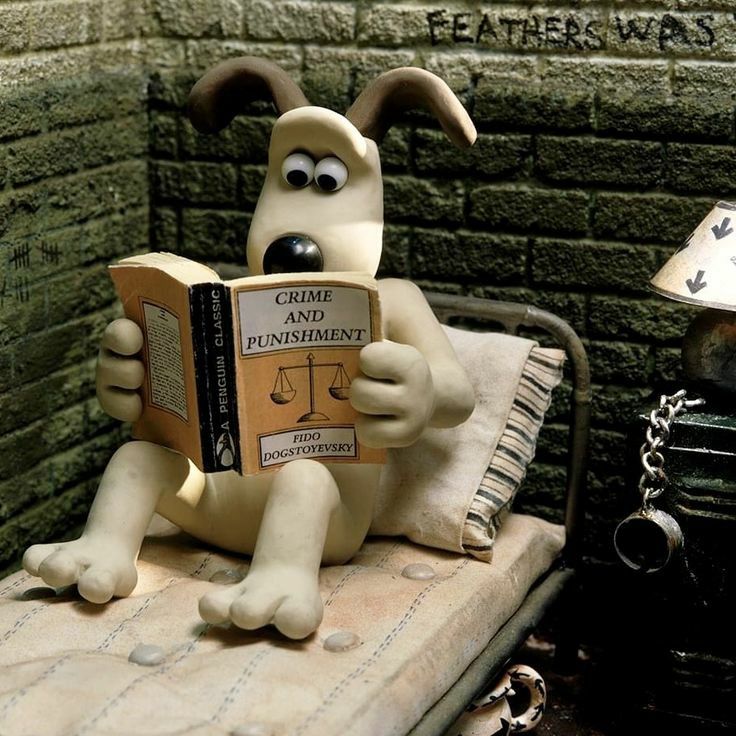
It’s a bit late, but I am here to talk about my favorite reads of 2025.
2025 was the year I read the most; I even managed to read one book per month for a while, which was impressive if you consider how awful my reading habits are. But even though the number of books grew considerably, I’ll only talk about five of them this time, the cream of the crop.
So, a few of these I managed to write a thing or two for this site back when Nightporter didn’t even exist, and the others were things I tried to read to write articles for my film magazine, Close Up (we had a section for literature in movies). I ended up being so full of texts to write for the magazine that I couldn’t write about what I read, so at least we have a moment in here to say a few words about some of them.
Here are them, in no particular order.

Fyodor Dostoyevsky’s White Nights
I did not read this for Close Up, but I was completely torn apart when a friend of mine said he wanted to talk about this book’s adaptations for the magazine. When another idea of mine for the literary section couldn’t work for lack of time, I immediately thought about writing about White Nights, which I had read a short while before the production of the texts. I had to let him write this since he didn’t have a lot of other texts to write, but I also think he did an awesome job. I’d be happy to talk a bit about this book’s adaptations in the future, just not for Close Up, obviously.
I’ll be honest, this is probably one of my favorite books of all time. There’s no particular order here, but this was by far the best read of the year. If you want a brief description of the story: A lonely and depressed man from St. Petersburg meets a sad girl on a bridge in one of his night walks. Through the course of four nights they meet, all the while becoming closer and closer, with the man’s heart beating for this girl while her heart beats for another person.
When I read this, I was still suffering from the ripples of a very similar situation. If you read this publication, you probably know a bit about it by now. I feel like the more I read everything the Dreamer talked about, the more I saw myself and couldn’t look away. He was my direct copy, which was sad because I don’t think he is supposed to be romanticized, as a lot of the bright minds on Goodreads might imagine. With books like these, especially the ones written by such skilled writers, books that make you so easily side with the protagonist and pity his position, you’re not supposed to blindly bow down to your compassionate heart. You must understand why you must not be the Dreamer. And it’s a hard lesson for dreamers like us.
More on the reviews I read: Even though you can see a few negative feminine reactions to this book because of how we as a society tend to see men like the Dreamer (and in all honesty, a lot of the guys like the Dreamer nowadays are lonely for a reason), I was actually relieved to see how everyone in this story is treated with such compassion. Dostoyevsky writes as if to pity the Dreamer, but you also pity Nastienka. But it’s also beyond pity. It adds so much humanity and realism to a fanciful mind; you’re successfully transported to the melancholic sadness of a love so filled with holes and distance. I am so glad to see he understood Nastienka’s grief and pain, not only focusing on the loudness of the immeasurable torment of the Dreamer. While thinking about these (few, may I add) reviews I read and also about some stuff I want to write about in the future, I hate to think that more and more we’re going in a direction where the media literacy of the common people won’t stand for a different angle to be had on a laser focused storyline. It’s like soon enough we won’t be able to have pitiful characters to be wrong, or reprehensible acts to have any complexity.
Anyway, this was more about something I wanted to write than about the public’s reception of White Nights; I think everyone understands and loves White Nights these days.
This was my first Dostoyevsky. A very short read, also, if you’re interested in it. Through the time we’re observing Nastienka and the Dreamer, we can’t help but react strongly to the unsaid, to the said, to the undone and the done, as if every corner of the universe gets filled with an insurmountable silence; the gaps in space and the space fulfilled all brutally occupied by inaction and action, relief and agony. As the nature of such nothing-love, Dostoyevsky casts a cloud on the couple to last a lifetime, even through moments where life stands still.
Now I will quote a few of my favorite moments in White Nights. Skip it if you want to read it (again, it’s very short). Or read them. Sadly, I annotated the fuck out of this book, and it makes no sense to put everything here, so I won’t be able to put them all.
“Why is it that even the best of men always seem to hide something from other people and to keep something back? Why not say straight out what is in one’s heart, when one knows that one is not speaking idly? As it is every one seems harsher than he really is, as though all were afraid of doing injustice to their feelings, by being too quick to express them.” (insert truth nuke gif)
“No, Nastenka, I won’t sit down; I cannot stay here any longer, you cannot see me again; I will tell you everything and go away. I only want to say that you would never have found out that I loved you. I should have kept my secret. I would not have worried you at such a moment with my egoism. No! But I could not resist it now; you spoke of it yourself, it is your fault, your fault and not mine. You cannot drive me away from you.”…” (yeah I cried with this shit lmaaooooo that was quite unfair for me to read at that time)
“But to imagine that I should bear you a grudge, Nastenka! That I should cast a dark cloud over your serene, untroubled happiness; that by my bitter reproaches I should cause distress to your heart, should poison it with secret remorse and should force it to throb with anguish at the moment of bliss; that I should crush a single one of those tender blossoms which you have twined in your dark tresses when you go with him to the altar…. Oh never, never! May your sky be clear, may your sweet smile be bright and untroubled, and may you be blessed for that moment of blissful happiness which you gave to another, lonely and grateful heart!
My God, a whole moment of happiness! Is that too little for the whole of a man’s life?” (so much to unpack here, so many things to think about when you’re hit with this at the very end. like fuck you)
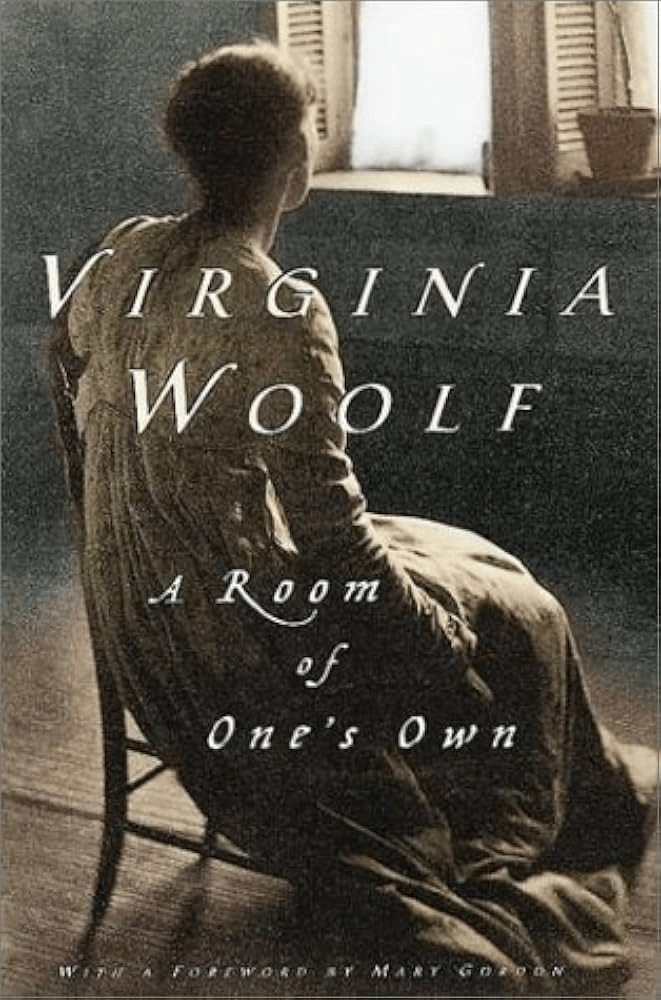
Virginia Woolf’s A Room of One’s Own
I think this one should be mandatory for every person regardless of their gender. Another short read (they’re all very short actually), this is one of my first reads in feminist literature and it’s quite absurd that so much of what is discussed in here haven’t changed for the woman of today. The angst and the inquietude of Woolf’s soul seen in display here felt like it was so ahead of its time upon reading it, but perhaps it was there all along, in the past; perhaps the women back then all wanted to say what she was saying here, but didn’t have the means to get the microphone any closer to their mouths, or an audience of men to listen.
It’s also haunting to have someone like Woolf talking openly about so many names of English literature, praising the women, giving her hot takes about some male writers… She could do it so successfully not only because she came much later than a lot of the classic writers of her country, but because of her own understanding of her country’s language and her rightful space in modernity’s language. I don’t know why, but one of my favorite things with any media that I engage with is to see those moments where you see some authors or creators talking about other people from the past or their time; every time Machado de Assis makes his fucking fanfiction call-ins to 1800’s books I really love it.
I’ll probably stop talking about it now, otherwise I’ll never live down the performative male allegations. But even though it was unfortunate to read about what she talks about here — the book is a rumination of a fictitious character (that’s basically her) about women in fiction —, I was so glad to be able to read it.
Below are some citations.
“Women have served all these centuries as looking-glasses possessing the magic and delicious power of reflecting the figure of man at twice its natural size. Without that power probably the earth would still be swamp and jungle. The glories of all our wars would be unknown. We should still be scratching the outlines of deer on the remains of mutton bones and bartering flints for sheep skins or whatever simple ornament took our unsophisticated taste. Supermen and Fingers of Destiny would never have existed. The Czar and the Kaiser would never have worn crowns or lost them. Whatever may be their use in civilized societies, mirrors are essential to all violent and heroic action. That is why Napoleon and Mussolini both insist so emphatically upon the inferiority of women, for if they were not inferior, they would cease to enlarge. That serves to explain in part the necessity that women so often are to men. And it serves to explain how restless they are under her criticism; how impossible it is for her to say to them this book is bad, this picture is feeble, or whatever it may be, without giving far more pain and rousing far more anger than a man would do who gave the same criticism. For if she begins to tell the truth, the figure in the looking-glass shrinks; his fitness for life is diminished. How is he to go on giving judgement, civilizing natives, making laws, writing books, dressing up and speechifying at banquets, unless he can see himself at breakfast and at dinner at least twice the size he really is? So I reflected, crumbling my bread and stirring my coffee and now and again looking at the people in the street. The looking-glass vision is of supreme importance because it charges the vitality; it stimulates the nervous system. Take it away and man may die, like the drug fiend deprived of his cocaine. Under the spell of that illusion, I thought, looking out of the window, half the people on the pavement are striding to work. They put on their hats and coats in the morning under its agreeable rays. They start the day confident, braced, believing themselves desired at Miss Smith’s tea party; they say to themselves as they go into the room, I am the superior of half the people here, and it is thus that they speak with that self-confidence, that self-assurance, which have had such profound consequences in public life and lead to such curious notes in the margin of the private mind.”
(for me it was absurd to create the concept of “A Woman Mirror” (an album I’m writing for since 2024) and then read a few months later Woolf talking about exactly what I was thinking. It gave me the necessary context from a feminine perspective for this masculine endeavor)
“Indeed, if woman had no existence save in the fiction written by men, one would imagine her a person of the utmost importance; very various; heroic and mean; splendid and sordid; infinitely beautiful and hideous in the extreme; as great as a man, some think even greater. But this is woman in fiction. In fact, as Professor Trevelyan points out, she was locked up, beaten and flung about the room. A very queer, composite being thus emerges. Imaginatively she is of the highest importance; practically she is completely insignificant. She pervades poetry from cover to cover; she is all but absent from history. She dominates the lives of kings and conquerors in fiction; in fact she was the slave of any boy whose parents forced a ring upon her finger. Some of the most inspired words, some of the most profound thoughts in literature fall from her lips; in real life she could hardly read, could scarcely spell, and was the property of her husband.”
(one of the peaks of the book is definitely this moment)
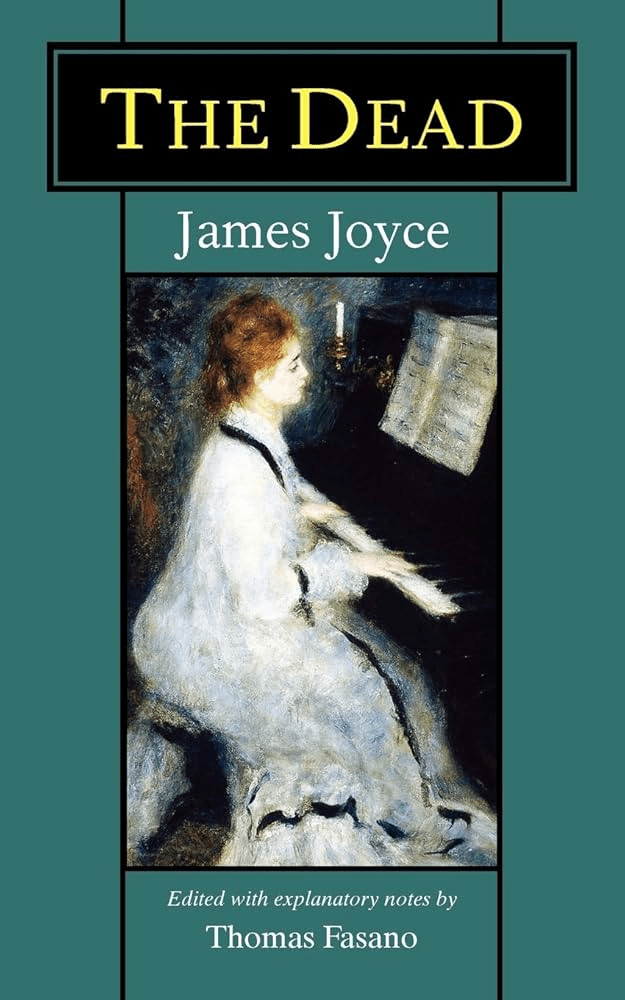
James Joyce’s The Dead
I have very few words to say about one of the works that most impacted me this year, mostly because I read it at such an awful moment of my year (it was like one or two weeks before the magazine had to be released and almost nothing was ready).
But if you have read any of the short stories or descriptive texts I wrote this last year, especially ones like “The Last Night of a Morning’s Veil” or even this year’s “Shrimp”, you have read texts that are basically trying to be Joyce’s The Dead.
In case you don’t know, The Dead is a short story included at the very end of Dubliners, one of Joyce’s most celebrated works. It’s probably the longest short story there, I don’t know because I have not read them. Since The Dead became so famous, a lot of people have read only that story from Joyce’s collection; I was gifted an e-book of only that story back then, I think, so I chose to read it and leave Dubliners for another time.
I can’t talk much about The Dead because all I like to talk about is its ending. There’s no twist or nothing, it’s just that it really moved me. If you feel interested in Joyce’s work (in case you don’t know, he’s the Finnegan’s Wake/Ulysses guy), give it a try.
I will now quote the last paragraph from the text. It doesn’t have any spoilers in it (although it has less punch without context), so you can read it and think for yourself.
“A few light taps upon the pane made him turn to the window. It had begun to snow again. He watched sleepily the flakes, silver and dark, falling obliquely against the lamplight. The time had come for him to set out on his journey westward. Yes, the newspapers were right: snow was general all over Ireland. It was falling on every part of the dark central plain, on the treeless hills, falling softly upon the Bog of Allen and, farther westward, softly falling into the dark mutinous Shannon waves. It was falling, too, upon every part of the lonely churchyard on the hill where Michael Furey lay buried. It lay thickly drifted on the crooked crosses and headstones, on the spears of the little gate, on the barren thorns. His soul swooned slowly as he heard the snow falling faintly through the universe and faintly falling, like the descent of their last end, upon all the living and the dead.”
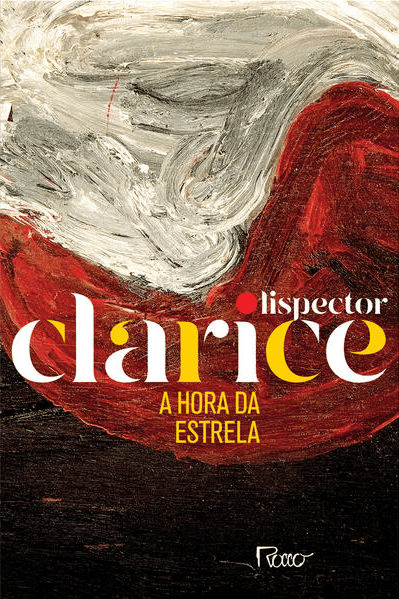
Clarice Lispector’s A Hora da Estrela
Hour of the Star, as is the translated name, is a Brazilian book written by Clarice Lispector, one of Brasil’s most beloved authors. It’s another very short read.
It’s very easy to fall in love with the way she writes in this book. The way she writes in Portuguese is particularly overbearing, as if she is intentionally asking for you to take your time with what she is beautifully trying to say. If I was to compare her writing to Machado’s (another Brazilian author, probably the best), it’s as if both of them have that moment in the text where they lead you to a brilliant realization through a brilliant saying, but Lispector’s path is this thorned rose; to get to the prettiness you’re stung with the prettiness.
It’s a bit easier to compare this book of hers to Machado since the person that narrates it kind of looks like a Machado character, but I would never take off her credit: what she does here is entirely her own, from beginning to end. It is a voice to not be missed, and it’s endlessly sad that this was the last book she published while alive.
I got some citations from a translated version of the book. Spoilers free, I think.
My strength undoubtedly resides in solitude. I am not afraid of tempestuous storms or violent gales for I am also the night’s darkness. Even though I cannot bear to hear whistling or footsteps in the dark.
I write because I have nothing better to do in this world: I am superfluous and last in the world of men. I write because I am desperate and weary. I can no longer bear the routine of my existence and, were it not for the constant novelty of writing, I should die symbolically each day. Yet I am prepared to leave quietly by the back door. I have experienced almost everything, even passion and despair.
I ask myself: will she one day experience love and its farewell? Will she one day experience love and its deceptions? Will she experience love’s rapture in her own modest way? Who can tell? How can one disguise the simple fact that the entire world is somewhat sad and lonely? (sadly this one is much more beautiful in Portuguese)
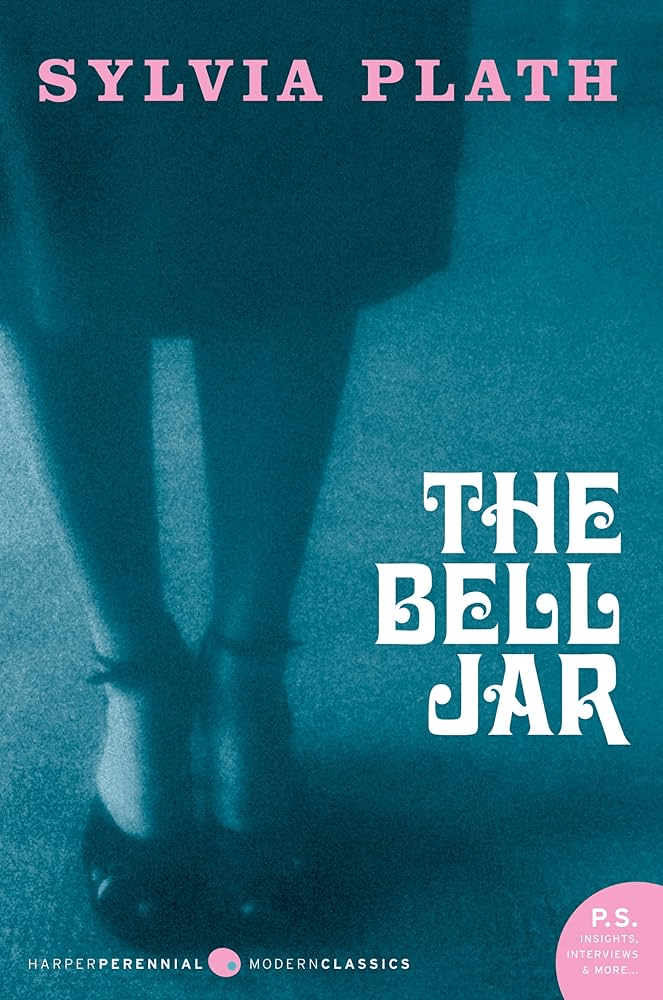
Sylvia Plath’s The Bell Jar
There’s not much room to perform my masculinity any more than I already have; I read a lot of female authors this year without even realizing. Some are not even on this list. But I chose to close this list off with Plath’s Bell Jar because it was one of the most interesting reads of the year.
I suppose there are some similarities between Plath’s and Woolf’s way of rebelling against the oppression they felt; in both moments, the anger can flood the pages beyond the words. I suppose this is where a lot of people sign off and can’t relate to their obnoxious nature, but Plath goes beyond and tries to translate her own immense depression and numbness, giving color to a completely greyed out character based on herself.
In this process, she creates an unlikeable person to display her own feelings and thoughts, in a way that I suppose inspired me a bit this year, too, in my writings. It can definitely be too much sometimes, as her sorrowful nature is screaming from every corner of the pages, but I think she managed to successfully translate what she was dying — quite literally — to take out of her.
I had some issues with some parts, however. As I said, I don’t want media to shy away from the complex nature of its characters, but there were instances where Plath’s bigoted character was weirdly too real. I read this paper called “Sylvia Plath and White Ignorance: Race and Gender in “The Arrival of the Bee Box””, talking more about her role in the modern discourse, I’d love if you guys checked it out.
Anyway, these problems led me to almost not put this book in here. However, I’d like to at least take this moment to acknowledge that my writing kind of inadvertently started to copy Plath’s after reading this. Even though she failed to convince me she was a clean slate, her style and tone were secretly what I always wanted to read and write like. In this year, I suppose I was a worse Sylvia Plath trying to write an even worse version of James Joyce’s The Dead. I am, although, glad to be so close and connected to such works of art. I hope to never let myself wrinkle away from inspiration.
Some citations now:
“I felt very still and very empty, the way the eye of a tornado must feel, moving dully along in the middle of the surrounding hullabaloo.” (yeah that’s one of those instant classic ones)
“I stared through the frieze of rubber plant leaves in Jay Cee’s window to the blue sky beyond. A few stagey cloud puffs were travelling from right to left. I fixed my eyes on the largest cloud, as if, when it passed out of sight, I might have the good luck to pass with.” (not the best passage but it is kind of insane how I subconsciously started to write like a worse version of this after a while)
“When I lifted my head, the photographer had vanished. Jay Cee had vanished as well. I felt limp and betrayed, like the skin shed by a terrible animal. It was a relief to be free of the animal, but it seemed to have taken my spirit with it, and everything else it could lay its paws on.” (just textbook Plath, really)
Anyway, this is it for today.
Ever since writing Shrimp I feel like writing more fiction now. If anything else comes out of me, make sure to check it out on the-thief.
Nightporter’s february playlist is already here! The january playlist post will be out soon enough.
Nightporter is a reader-supported publication. To receive new posts, consider becoming a free subscriber — It helps the morale! To support my work, consider becoming a paid subscriber or buying me a coffee on Ko-fi!

![[en] updates on the front page!!!](https://the-thief.blog/wp-content/uploads/2026/03/image-14.png?w=603)
![[en] Nightporter’s Playlist for February 2026 (beautiful edition)](https://the-thief.blog/wp-content/uploads/2026/03/image-13.png?w=1024)
![[br] Eu Acredito em Mágica](https://the-thief.blog/wp-content/uploads/2026/03/b642d15566f93254881327a8d1a2f2ac.jpg?w=771)
 the thief
Deixe um comentário